
Blog / Farmington Ford Service

Blog

All Farmington Ford Service Farmington Ford Dealer Farmington Used Cars Ford Super Duty Ford F-150 Ford Bronco Sport Ford Expedition Ford Explorer Ford Bronco Ford Escape Ford Maverick Ford Ranger
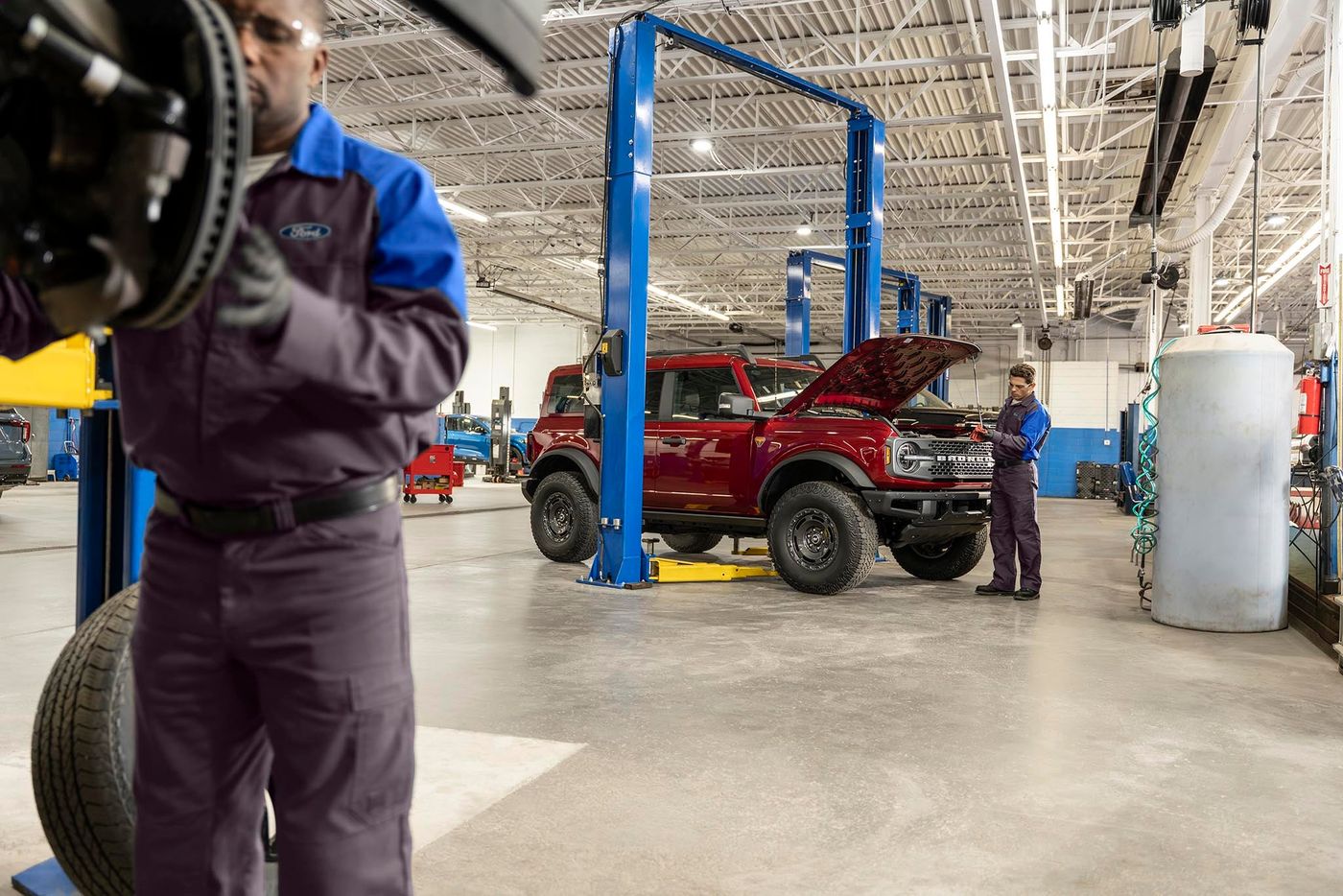
Ford technician holding a brake rotor and hub with a red Ford Bronco on a lift behind, brake service in Farmington MO

Ford Brake Warning Signs Farmington Drivers Should Not Ignore

Service  |  Farmington, MO Brakes almost always warn you before they quit. We'll go through what each sign means and why the hills around here wear brakes out faster. Nobody wants to gamble on brakes. They're still easy to put off, because they wear so slowly you hardly notice. The pedal feels a little different this month. The squeak comes and goes. Before long it's just part of the drive. Roads around Farmington don't do your brakes any favors. There are long grades on US 67 and the up and down through the Arcadia Valley. Add stop and go traffic on Karsch Boulevard and a trailer headed to the lake, and that's a lot of heat and wear. Quick answer: Get your Ford's brakes checked if you hear squealing or grinding, feel a pulsing or soft pedal, or it pulls to one side when you stop. A brake warning light means the same thing. Pads go first and rotors last longer, but hills and towing wear both faster. Brake fluid ages too, so follow the interval in your Owner's Manual. Most common sign High pitched squeal when braking Do not wait Grinding, soft pedal or warning light Wears faster with Hills, towing, heavy loads, short trips In this post Warning signs to know Pads vs rotors Why brake fluid matters Hills, towing and loads What a brake visit covers What Are the Warning Signs Your Ford Needs Brake Service? Each symptom points to a different part of the system. Squealing is an early warning. Grinding means damage is already happening. Tell us what you're hearing and feeling and our technicians can track it down faster. Brake symptoms to take seriously Squealing or squeaking. Many brake pads have a small metal wear indicator that squeals against the rotor when the pad gets thin. That's an early warning. Book a check before it turns into grinding. Grinding. A harsh grinding or scraping sound usually means the pad material is gone and metal is contacting the rotor. Drive it as little as you can and get it in soon, because every stop does more damage. Pulsing pedal or shaking wheel. A pedal that pulses under steady braking, or a steering wheel that shakes, often points to rotors that have worn unevenly. Soft or spongy pedal. A pedal that sinks lower than normal or feels mushy can mean air or moisture in the fluid, a leak, or another hydraulic problem. Don't wait on this one. Pulling to one side. If your Ford drifts left or right when you brake, a caliper may be sticking or pads may be wearing unevenly. Tires and alignment can cause a pull too. We'll check all of it. Brake warning light. A red brake light on the dash can mean low fluid or a system fault. Check that the parking brake is fully released, then have it inspected. Pay attention to smells, too. A hot, sharp burning smell after a long downhill or a heavy tow just means the brakes worked hard. If you smell it in normal driving, a caliper may be dragging. What Is the Difference Between Brake Pads and Rotors? When you press the pedal, the caliper squeezes the pads against a metal disc called the rotor, which spins with the wheel. Friction turns your speed into heat and you slow down. Brake pads are the wear item. The friction material is made to wear away, so they get replaced most often. Rotors wear more slowly. Once they get too thin, grooved or uneven, they're replaced along with the pads. Calipers and hardware hold and move the pads. Slide pins and clips need to move freely so the pads apply and release evenly. How long pads last depends on the vehicle and who's driving it. A Ford Escape running mostly highway miles is a lot easier on pads than a Ford F-150 pulling a stock trailer up and down gravel roads. We measure pad and rotor thickness at inspections and tell you how much is left, so you can plan for it. Squealing is an early warning. Grinding means damage is already happening. Why Does Brake Fluid Need to Be Changed? Brake fluid carries the force from your foot to the calipers. Over time it soaks up moisture from the air. That moisture lowers the fluid's boiling point and can cause corrosion inside the system. Boiling is the real danger on long downhill runs or heavy tows. Get the fluid hot enough and the pedal can go soft right when you need it. Fresh fluid handles that heat better. A lot of current Ford maintenance schedules put brake fluid on a time interval, not miles. Your Owner's Manual and the FordPass app have the exact schedule for your model, and we can check the fluid at any visit. Arcadia Valley tip MO 21 through the hills around Ironton and Pilot Knob has some long grades, and so does the drive up toward Taum Sauk Mountain, the highest point in Missouri. Use a lower gear on the way down instead of riding the brakes the whole way. Give them a chance to cool off between stops. How Do Hills and Towing in the Ozark Foothills Affect Your Brakes? Weight and grade are what make brakes work hardest. A boat headed to Clearwater Lake or a trailer full of hay bales is more mass to stop, and every downhill piles on. The hills between Farmington, Fredericktown and the Arcadia Valley are tougher on brakes than flat country. 1 Use Tow/Haul mode when you have it Many Ford trucks and SUVs have a Tow/Haul mode that changes shift timing and can help slow the vehicle with the engine on downgrades. Your Owner's Manual explains how it works on your model. 2 Set up the trailer brakes If your trailer has its own brakes and your Ford has an integrated trailer brake controller, set the gain for the load. That way the trailer helps stop itself instead of shoving your truck. 3 Leave more room A heavy load takes longer to stop. Back off a little more, especially on wet spring pavement. 4 Check brakes before towing season Get the brakes looked at in spring, before boat and camper trips start. Schedule Brake Service See Service Specials What Happens During a Ford Brake Service at Sam Scism Ford? It starts with an inspection. Our Ford trained technicians pull the wheels and measure the pads and rotors. They look over the calipers, hoses and lines and check the fluid. Then we'll tell you straight what it needs now and what can wait. If it needs parts, we use genuine Ford and Motorcraft brake parts made for your vehicle. You can wait in the lounge, which has Wi-Fi, coffee, popcorn and a kids table, or take the courtesy shuttle. Depending on the work, a loaner may be available. Some brake work can even come to you. Brakes are on the Ford Mobile Service list, so a technician may be able to do it at your home or work, depending on distance and availability. Service is open 8:00 AM to 5:00 PM Monday through Friday, closed noon to 1:00 PM. If something has you worried, call 573-430-1693 and we'll help you figure out how soon to come in. Book it your way Schedule online, in the FordPass app, or by phone at 573-430-1693. Ask whether Ford Mobile Service can handle your brake work at home or at the office. Brake Noises and Feel Why do my Ford's brakes squeak? + A wear indicator on the pads may be telling you they're getting thin. Moisture or dust can cause a brief squeak on a damp morning too, but a squeal that keeps coming back deserves an inspection. Is it safe to drive with grinding brakes? + Grinding usually means metal is touching metal, which reduces stopping power and damages rotors quickly. Limit driving and get it in as soon as you can. Why does my brake pedal feel soft? + Air or moisture in the fluid, a leak, or a hydraulic problem can all cause it. Treat a soft pedal as urgent and have it checked right away. Pads, Rotors and Parts How long do brake pads last on a Ford? + It depends on the model, the load and how you drive. Towing, hills and lots of stop and go driving wear them faster, so we measure them at each inspection and tell you what is left. Do I need new rotors every time I replace pads? + Not always. Rotors are replaced when they are too thin, grooved or uneven, and our technicians measure them to decide. What brake parts does Sam Scism Ford use? + We install genuine Ford and Motorcraft parts made for your vehicle. Brake Fluid How often should Ford brake fluid be changed? + Ford lists the interval in the scheduled maintenance section of your Owner's Manual, and it varies by model. Many current schedules measure it in years rather than miles. What happens if brake fluid gets old? + Moisture builds up, which lowers its boiling point and can cause internal corrosion. On long downhill runs, that can lead to a soft pedal. Can I just add brake fluid myself? + You can, but a low level usually means worn pads or a leak, and adding more just hides it. Have it inspected instead. Towing and Local Driving Does towing wear out brakes faster? + Extra weight means more heat and wear every time you stop. Using Tow/Haul mode and properly adjusted trailer brakes takes some of the load off. How should I drive down long hills to protect my brakes? + Use a lower gear so the engine helps slow the vehicle, and brake firmly in shorter applications instead of riding the pedal the whole way down. Why does my truck pull to one side when braking? + A sticking caliper or uneven pad wear are common causes, though tires and alignment can play a part. An inspection sorts out which one it is. Scheduling Brake Service How do I schedule brake service in Farmington? + Book on our website, use the FordPass app, or call 573-430-1693. We're at 5019 Flat River Road. Can Ford Mobile Service do my brakes? + Brakes are on the Ford Mobile Service list, though availability depends on the job, distance and schedule. Call to see what fits. Are there brake service specials? + Current offers are posted on our Service and Parts Specials page and change during the year. Order brake parts Get genuine Ford and Motorcraft brake parts for your vehicle. Order Parts Meet the service team See what the Sam Scism Ford service center handles. Service Center
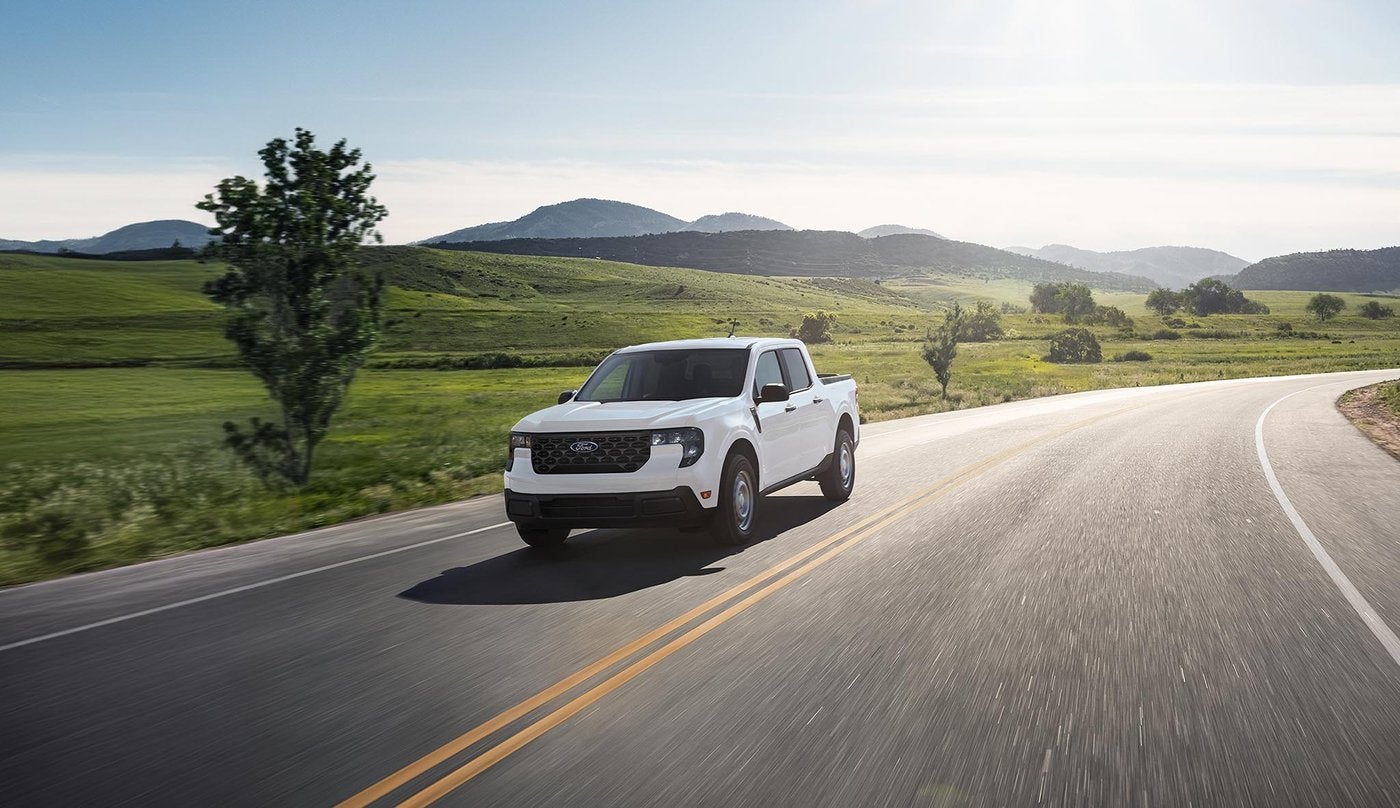
White Ford Maverick on a curving two lane road through green hills, spring tire check season in Farmington MO

Ford Tires and Wheel Alignment After Pothole Season in Farmington

Service  |  Farmington, MO A winter of freeze, thaw and patched blacktop leaves its mark on tires and steering. This is what to look for this spring, and when a quick check can save a set of tires. By March, everybody in St. Francois County has a mental map of the worst potholes. There's the one by the stoplight you can't swerve around. There's the washboard stretch on the county road home, and the patch that sank again after the last freeze. Your tires and suspension took every one of those hits. Usually a pothole leaves you with a jolt and a bad word. Sometimes, though, it nudges the wheels out of alignment or bruises a tire, and you don't see the damage until it's worn in over the next few thousand miles. Spring's the time to look, before a small problem eats a set of tires. Quick answer: A hard pothole hit can knock the alignment off or damage a tire. Watch for a pull to one side, an off center steering wheel, vibration or uneven tread wear. Ford recommends rotating tires at every oil change and checking pressure monthly, and spring's big temperature swings make that monthly check count. Rotation Every oil change, per Ford Pressure check Monthly, to the door jamb label Alignment check After a hard hit or new tires In this post Why pothole season hurts Signs of misalignment Reading tire wear Spring pressure swings Rotation timing When to replace tires Why Is Spring Pothole Season Hard on Tires and Alignment? Water gets into cracks in the road, freezes, expands and then thaws. That leaves a weak spot, and traffic breaks it open. Cold snaps followed by warm afternoons run that cycle over and over all winter, so the roads look their worst in early spring. Drop a tire into one at speed and the force goes straight through the wheel into the suspension and steering. Hit it hard enough and you can shift the alignment or bend a wheel. It can also pinch the tire against the rim and hurt the sidewall from the inside. Gravel county roads are their own kind of hard. Loose rock and washboard ruts chew at tread and shake suspension parts every day. A truck that lives on gravel needs a closer eye than one that stays on pavement. What Are the Signs Your Ford Is Out of Alignment? Alignment trouble tends to creep up on you. After a rough stretch of road, watch for these: Get these checked soon Pulling to one side. On a flat, straight road, your Ford drifts left or right when you ease off the wheel. Off center steering wheel. The wheel sits crooked while you drive straight ahead, even if the truck tracks fine. Vibration at speed. A shake through the steering wheel can mean a bent wheel, a tire problem or balance. Have it looked at. A bulge or bubble on the sidewall. That points to internal tire damage. Replace the tire before it fails, especially before highway driving. Uneven or fast tread wear. One edge wearing faster than the other is a classic alignment clue. If you hit something hard enough to wince, ask for an alignment check next time you book. Catching it early saves the tires you already paid for. What Do Uneven Tire Wear Patterns Tell You? Your tread keeps a record of how the truck's been treated. Run a hand across it and look close at the edges: Inner or outer edge worn down: usually a camber issue, meaning the wheel leans inward or outward instead of standing straight. Feathered tread: ribs that feel smooth one way and sharp the other often point to a toe problem. Center worn more than the edges: a sign the tire has been run overinflated. Both edges worn more than the center: a sign of running underinflated. Cupped or scalloped spots: can point to worn suspension parts or balance trouble. If one tire's wearing oddly and the rest look fine, the problem's usually at that corner. A technician can measure tread depth across each tire and tell you what fixes it. A truck that lives on gravel needs a closer eye than one that stays on pavement. Why Does Tire Pressure Swing So Much in Spring? Air shrinks when it cools and expands when it warms. Goodyear puts it at roughly 1 to 2 PSI for every 10 degree drop. A Missouri spring morning in the 30s can turn into an afternoon in the 70s, so pressure you set on a warm day can read low the next cold morning. That's why the tire pressure light likes to pop on during a chilly start and go out a few miles later. Don't ignore it anyway. Low pressure wears the shoulders and costs you fuel economy. It also makes a tire easier for a pothole to damage. Set pressure to the number on the label inside the driver door jamb, not the maximum printed on the sidewall. Check it cold, before you drive. Ford recommends once a month. Park Hills driver tip If you pull a loaded trailer to the lake one weekend and drive empty the next, look up the load related pressure guidance in your Owner's Manual. If your truck goes back and forth between heavy loads and empty commutes on US 67, run a gauge over the tires before each trip. Schedule Tire Service See Service Specials How Often Should You Rotate Ford Tires? Ford keeps it simple. Rotate the tires every time you get the oil changed. On most vehicles the fronts do the steering and carry more weight, so they wear differently than the rears. Swapping them around evens that out, and the whole set lasts longer. It's also a chance for the technician to catch a nail in the tread or a damaged sidewall early. If your Ford spends a lot of time on gravel, stick to that schedule. You don't even have to come in for it. Ford Mobile Service handles tire rotations at your home or work, depending on distance and availability. Book through the dealer, the FordPass app, or by calling 573-430-1693. When Is It Time for New Tires? Tires don't wait for a convenient month. The usual signs a set is done: Tread at the wear bars: small raised bars molded into the grooves sit at 2/32 inch. When the tread is flush with them, the tire is worn out. Poor wet traction: spring storms find worn tires fast. If your Ford slides more than it used to in the rain, the tread may be shallower than it looks. Sidewall damage: cuts, bulges or cracking from age or a hard pothole hit. Uneven wear past saving: once a tire's worn badly on one edge, an alignment won't bring that tread back. When it's time, tell the service team how you drive. Highway commuting toward St. Louis calls for a different tire than gravel and mud around the farm. Get an alignment check with the new set so they wear evenly from day one. Book it your way Schedule online, in the FordPass app, or call 573-430-1693. Or stay put and let Ford Mobile Service rotate your tires at home or work. Potholes and Damage Can one pothole knock my Ford out of alignment? + A hard enough hit can shift alignment angles, bend a wheel or damage a tire. If the steering feels different afterward, get it checked. How do I know if a pothole damaged my tire? + Look for a bulge on the sidewall, a cut, or a slow loss of pressure. Any sidewall bulge means the tire should be replaced. Are gravel roads hard on tires? + Loose rock and washboard ruts wear tread and stress suspension parts, so trucks that live on gravel benefit from regular rotations and inspections. Alignment What are the signs I need an alignment? + Pulling to one side, an off center steering wheel and uneven tread wear are the most common signs. How often should alignment be checked? + Tire makers suggest a check at least once a year, after a hard impact, and whenever new tires go on. Does a crooked steering wheel always mean bad alignment? + Usually, though worn steering or suspension parts can cause it too. A technician can tell which one it is. Tire Pressure Why does my tire pressure light come on when it is cold? + Cold air takes up less space, so pressure drops overnight. The light may go out once the tires warm up, but check and adjust them anyway. What pressure should my Ford tires be? + Use the pressure listed on the label inside the driver door jamb, measured when the tires are cold. How often should I check tire pressure? + Ford recommends a monthly check, and spring temperature swings make that habit more important. Rotation and Replacement How often should Ford tires be rotated? + Ford says to rotate them every time you get an oil change, which keeps wear even across all four. When should I replace my tires? + Replace them when the tread reaches the wear bars, when wet traction fades, or when the sidewall is damaged. Can I replace just one tire? + Sometimes, depending on how worn the others are and whether your Ford has four wheel or all wheel drive. Ask the service team before buying a single tire. Scheduling and Convenience Can Ford Mobile Service rotate my tires at home? + Tire rotation is on the Mobile Service list, depending on distance and availability. Book through the dealer or the FordPass app. Are there tire or alignment specials? + Check our Service and Parts Specials page for current offers, which change through the year. When is the Sam Scism Ford service department open? + Monday through Friday, 8:00 AM to 5:00 PM, closed from noon to 1:00 PM and on weekends. Talk to a service advisor Call 573-430-1693 or send us a message about that pull or vibration. Contact Us Visit the service center See what our Ford trained team handles. Service Center

Red Ford Bronco Sport with roof gear climbing a snowy hillside trail, cold weather battery season in Farmington MO

Ford Battery Testing and Replacement During a Missouri Cold Snap

Service  |  Farmington, MO A battery that limped through fall tends to quit on the first hard freeze. These are the signs to watch for, how we test it, and what a newer Ford needs once a new one goes in. It's a morning in the teens. You turn the key or push the button, and the engine groans over slower than it should. Maybe it catches. Maybe the dash lights flicker and that's it. Either way, the battery just told you something. Cold doesn't usually kill a healthy battery. It finds the one that was already getting weak. Around Farmington, Bonne Terre and the rest of St. Francois County, the first real cold snap of the year is when our service drive fills up with Fords that started fine in October. Quick answer: Cold slows the chemistry inside a battery while a cold engine takes more to crank, so a weak battery that got by in fall often fails on the first hard freeze. A quick test tells you where it stands before it leaves you stuck. On newer Fords with a battery management system or Auto Start-Stop, a new battery has to be set up right so the electrical system reads it correctly. Cold weather risk Less battery output, more cranking effort Quick check Battery test during any service visit At your door Ford Mobile Service can replace batteries In this post Why cold exposes weak batteries Warning signs How testing works Resets on newer Fords Battery service at home Helping a battery last Why Does Cold Weather Expose a Weak Battery? A battery makes power through a chemical reaction, and that reaction slows down as it gets colder. On a bitter morning it just has less to give. Meanwhile the engine wants more. Cold oil is thicker, so the starter has to work harder to spin it over. Less going out and more being asked for is how a battery with some age on it can feel fine all fall, then give out the first week the wind chill drops below zero. Summer's part of it too. Our hot, humid months wear on a battery's insides, and you often don't see the damage until winter puts a real load on it. If yours has a couple of Missouri summers behind it, get it tested before the coldest weeks. What Are the Warning Signs of a Failing Battery? Batteries rarely die without dropping a few hints. Watch for these, especially on cold mornings: Do not ignore these Slow or labored cranking. If it turns over sluggishly, there may not be enough left for the next cold start. Battery or charging warning light. A light on the dash can point to the battery, the alternator or a connection problem. Get it checked soon. Dim lights or flickering screens at startup. Headlights that brighten when you rev, or a center screen that reboots during cranking, suggest low voltage. Auto Start-Stop no longer shutting the engine off. On many Fords this is one of the first clues that charge is low, though cold weather alone can also keep it from engaging. Corrosion or a swollen case. White or green buildup on the terminals, or a battery case that's bulging, means it's time for a closer look. One sign by itself doesn't always mean the battery's done. A test sorts out whether it's the battery, the charging system or something pulling power while the vehicle sits. How Is a Ford Battery Tested? A real battery test takes a few minutes and tells you a lot more than a voltage reading in the driveway. At Sam Scism Ford it usually goes like this. 1 Check the battery's health The technician hooks up an electronic tester to measure state of charge and how much cranking power the battery can still deliver, then compares that to what it was built to do. 2 Look at the charging system If the battery's fine, we check the alternator and connections next. A weak alternator can drain a good battery. 3 Inspect cables and terminals Loose clamps and corrosion cause plenty of no starts. Sometimes cleaning and tightening fixes it and you don't need a battery at all. 4 Review the results with you We'll tell you if it passed, if it's getting weak or if it needs replacing now. That way you decide, not the weather. Ford's Multi Point Inspection includes a look at battery life, so we can check it on any service visit. Don't wait for a no start. Schedule a Battery Test See Service Specials Why Do Newer Fords Need a Battery Reset After Replacement? Older trucks only cared that the battery had a charge. A lot of newer Fords keep a close eye on it with a battery management system. That system tracks charge and health, decides how hard to charge, and cuts back on electrical features when it needs to protect the battery. Put a new battery in and that system has to learn it. Ford owner manuals describe a relearn period with the vehicle shut off and sitting, and until it finishes, some comfort features such as heated seats or the rear defroster may shut off sooner than normal. Some models also call for the system to be reset with service tools so it knows a fresh battery is installed. Your Owner's Manual lists the procedure for your vehicle. What does this mean for Auto Start-Stop? Ford's Auto Start-Stop won't shut the engine off at a light if battery charge is low or it's too cold outside. It also stays running until the engine's warmed up and while the cabin still needs heat. So on a frigid morning, an engine that keeps idling at the light is usually normal. If it's still not shutting off after weeks of mild weather, the battery or the battery management system may need a look. Why match the battery to the vehicle? Fords with Auto Start-Stop and heavy electrical loads are built around a specific battery type and size. The wrong one can wear out early and confuse the electrical system. We put in Motorcraft batteries matched to your Ford and take care of any reset. Farmington driver tip If your Ford sits most of the week, like a farm truck parked between hay runs or a second car that only goes to church, a longer drive on US 67 or MO 32 once a week helps keep the battery charged. Five minute hops across town in January don't give it time to recover from the morning start. Can Ford Mobile Service Replace a Battery at Home? It can. Ford Mobile Service sends a technician to your home or work for routine jobs, and batteries are on that list. It depends on distance and the schedule, so call ahead or book through us or the FordPass app. If it won't start at all, tell the service desk that up front at 573-430-1693. We'll figure out with you whether a jump and a trip in or a mobile visit makes more sense for where you are. You're welcome to bring it in, too. Service hours are 8:00 AM to 5:00 PM Monday through Friday, closed from noon to 1:00 PM. There's Wi-Fi and coffee in the lounge, or the courtesy shuttle can run you to work while we handle it. How Can You Help a Battery Last Through Winter? No battery lasts forever. A few habits help it go longer: Shut off accessories before you shut off the engine. Leaving the heater fan, lights and radio on adds load at the next start. Watch for parasitic drains. Aftermarket accessories, dash cams and chargers left plugged in can pull power while the vehicle sits. Use a maintainer on vehicles that sit. A trickle charger keeps a seldom driven truck or trailer tow vehicle ready. Keep terminals clean and tight. Corrosion adds resistance the starter doesn't need on a cold morning. Test before the coldest weeks. Better to know now than in a parking lot. Book it your way Schedule online, in the FordPass app, or call 573-430-1693. If you'd rather have it done at home or work, ask about Ford Mobile Service for battery replacement. Cold Weather and Batteries Why does my Ford start slower in cold weather? + Cold slows the battery's chemical reaction while thicker oil makes the engine harder to crank. A battery near the end of its life shows it first on frigid mornings. Can a battery that tested fine in fall fail in winter? + It happens. Cold adds load a borderline battery can't handle, so a second test before the coldest weeks makes sense. Does summer heat affect battery life? + Heat wears down a battery's internals over time, and the damage often shows up the following winter. Testing and Diagnosis How long does a battery test take? + The test itself takes only a few minutes, and it can be added to any service visit. What if the battery passes but the truck still will not start? + The alternator, cables, starter or a parasitic drain could be the cause. Our technicians check the charging system and connections next. Is a dash battery light always the battery? + Not always. It can point to the alternator or a bad connection, and a test is how you find out. Newer Ford Technology Why does my Auto Start-Stop stop working in winter? + Ford's system won't shut the engine off when it's too cold outside, the engine's cold or the battery's low. That's normal on frigid days. Does a new battery need to be programmed? + Many newer Fords have a battery management system that has to learn the new battery, and some models need a reset with service tools. Your Owner's Manual lists the steps for your vehicle. Can I install any battery that fits? + Fords with Auto Start-Stop and heavy electrical loads are built for a specific battery type. Matching it avoids short battery life and electrical glitches. Replacement and Parts What batteries does Sam Scism Ford install? + Our technicians install Motorcraft batteries matched to your Ford's requirements. Are there battery specials right now? + Current offers are listed on our Service and Parts Specials page, which changes through the year. Can I buy a battery and install it myself? + You can order parts through our parts department at 573-430-1680. On newer Fords, ask about any reset your vehicle needs after the swap. Scheduling and Convenience Can Ford Mobile Service replace my battery at home? + Batteries are on the Mobile Service list, depending on distance and availability. Book through the dealer or the FordPass app. What are the service department hours? + Service runs 8:00 AM to 5:00 PM Monday through Friday, closed from noon to 1:00 PM and on weekends. How do I schedule a battery test in Farmington? + Book online, use the FordPass app, or call 573-430-1693. Sam Scism Ford is at 5019 Flat River Road. Meet the service team See what the Sam Scism Ford service center handles. Service Center Need a part Order genuine Ford and Motorcraft parts. Order Parts

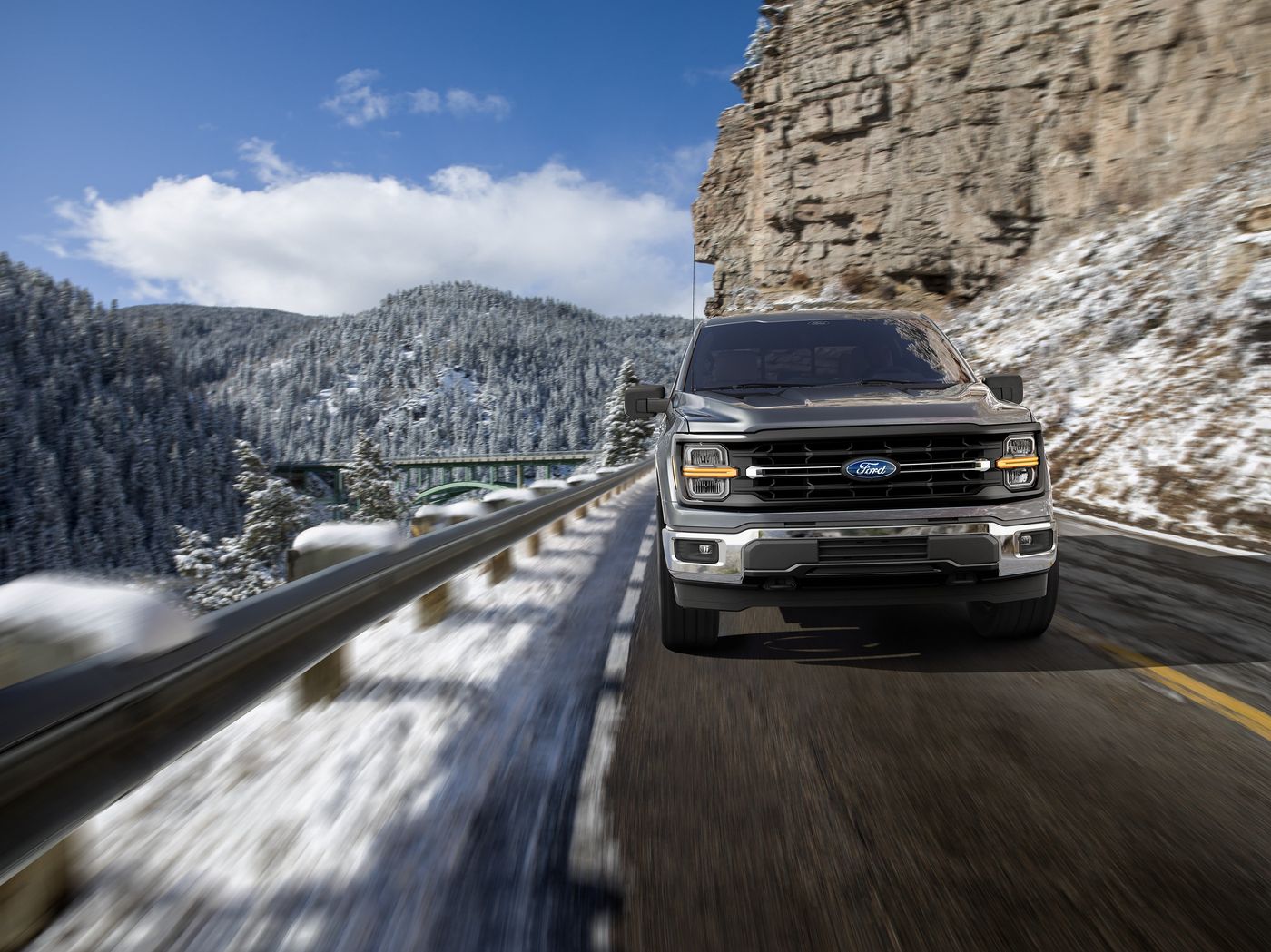
Gray Ford F-150 Lariat driving a snowy mountain highway, winter oil change timing for Farmington MO drivers

Ford Oil Change Schedule: What Farmington Owners Should Know

Service  |  Farmington, MO Your Ford keeps track of its own oil life. We'll show you how to read it, what we look at while it's in the shop, and why the way folks drive around here can move the date up. The holidays are over. You put a few hundred extra miles on visiting family, and the sticker in the corner of the windshield says you're due. The dash says there's still life left in the oil. We get asked which one to trust pretty much every January. On most newer Fords, the oil life percentage on your dash is the schedule. The sticker on the windshield is only a reminder. Ford puts an Intelligent Oil Life Monitor in its vehicles that keeps an eye on how you drive and tells you when service is due. It still works inside some limits, though, and the way people drive around Farmington, Park Hills and the rest of St. Francois County has a lot to do with when your next oil change comes up. Quick answer: Most current Fords tell you when they need an oil change through the Intelligent Oil Life Monitor, and Ford caps it at one year or 10,000 miles, whichever comes first. Short trips, gravel roads, towing and hard cold snaps can bring that date sooner. We rotate the tires and look the rest of it over on the same visit. Oil and filter When the monitor calls for it, up to 1 year or 10,000 miles Tougher conditions Short trips, dusty roads, towing and idling shorten it Your exact schedule Owner's Manual and the FordPass app In this post How the oil life monitor works What a service visit covers How local driving changes it How a visit works Why records matter How Does a Ford Know When It Needs an Oil Change? The monitor doesn't count days on a calendar. It watches engine temperature, trip length, idle time and load, then figures how much useful life the oil has left. When that percentage gets low, you'll get a message on the cluster saying an oil change is due. That's why two identical F-150s with the same miles can come due at different times. A truck running steady highway miles up US 67 toward Festus is easier on its oil than one making short hops between job sites in Farmington, where the engine never fully warms up. There's still a ceiling. Ford wants an oil and filter change at least once a year or every 10,000 miles, whichever comes first, even if the display shows life left. Once the message pops up, try to get in within a couple of weeks. Don't let it ride. What Gets Checked During a Ford Oil Change? Oil changes are the visit we see most, so we treat each one as a checkup too. A typical visit at Sam Scism Ford covers: Oil and filter: fresh oil that meets the specification for your engine and a new filter. Tire rotation: moving tires front to rear on schedule so they wear evenly, plus a look at tread depth and pressure. Multi point inspection: brakes, belts, hoses, wipers, lights, battery and fluid levels. Filters as they come due: engine and cabin air filters on the intervals your schedule lists. Open recalls: a check for any open recall or software update tied to your VIN. That's what most visits look like. Every model and engine has its own list, though, so your Owner's Manual and the FordPass app have the final say for yours. The oil life percentage on your dash is the schedule. The sticker on the windshield is only a reminder. Does Driving in Southeast Missouri Change the Schedule? It can. Ford's schedule has a list of tougher conditions that call for oil service more often. Lots of short trips is one. Dusty or gravel roads, long idling, towing or hauling heavy loads and very cold weather are the others. A lot of normal driving around here checks those boxes. Farmington driver tip If your week means gravel county roads, a trailer out to the farm or a bunch of five minute trips across town, come in when the monitor first asks. Don't stretch it toward 10,000 miles. January cold snaps are rough on batteries too, so it's a good time to have yours tested while you're here. Do not wait on these Oil pressure warning. Pull over safely and shut the engine off. Driving on low oil pressure can ruin an engine fast. Low oil level message. Check the level and get it looked at soon, since some engines use a little oil between changes. New noises or smells. Ticking, knocking or a burning oil smell means call us now. Don't wait for the next interval. Schedule Service See Service Specials What Happens When You Bring Your Ford to Sam Scism Ford? It goes about the same way whether you wait in the lounge or have us come to you. 1 Book a time that works Schedule online, through the FordPass app, or by calling the service desk at 573-430-1693. Let us know what the oil life monitor reads and anything you've noticed. 2 Drop off, wait, or stay home Bring it to 5019 Flat River Road and grab a coffee in the lounge, or take the courtesy shuttle. For routine work, ask about Ford Mobile Service at your home or office. 3 Ford trained technicians do the work We use oil that meets Ford's spec for your engine and genuine Motorcraft parts. The rotation and inspection get done while it's on the lift. 4 Review what we found We'll go over what we did and anything coming due, so the next visit isn't a surprise. Some routine jobs don't need a trip to the shop at all. Ford Mobile Service can do oil changes, tire rotations, batteries, wipers and diagnostic scans where you are, depending on distance and availability. Why Do Maintenance Records Matter So Much? A stack of service records does two jobs. It shows the next buyer the vehicle was taken care of, and that helps at trade time. It also protects coverage you've already got. That goes double if you bought with Warranty Forever at Sam Scism Ford. It covers listed engine, transmission and drive axle parts for as long as you own the vehicle. What it asks of you is to follow the customary maintenance in your agreement and keep records. On time oil changes and a folder of receipts take care of your end. We're open for service 8:00 AM to 5:00 PM Monday through Friday. The desk closes for lunch from noon to 1:00 PM. Book it your way Schedule online, in the FordPass app, or by phone at 573-430-1693. Ask about Warranty Forever and how on time maintenance keeps it in force. Oil Changes and Oil Life How often does a Ford need an oil change? + Follow the Intelligent Oil Life Monitor on most current models. Ford caps the interval at one year or 10,000 miles, whichever comes first, and tougher driving such as towing, short trips and dusty roads can bring it sooner. What kind of oil goes in my Ford? + Use the grade and specification listed in your Owner's Manual for your engine. Our technicians use oil that meets that specification along with genuine Motorcraft filters. Who resets the oil life monitor after service? + Our technicians reset it at the end of every oil change. If you get it changed somewhere else, the reset steps are in your Owner's Manual, and the monitor should read 100 percent afterward. Mileage and Timing Does my Ford need service if I barely drive it? + It does. Oil breaks down with time as well as miles, so Ford calls for a change at least once a year even when the monitor still shows life left. Do short trips around town wear oil faster? + They can. An engine that never fully warms up collects moisture and fuel in the oil, which is why lots of short trips count as a tougher condition on Ford's schedule. Should I change oil before winter or summer? + Go by the monitor, not the season. If you do come in before a cold stretch, we'll test the battery and check the coolant while it's here. Cost and Coverage Are there oil change specials at Sam Scism Ford? + Current service offers are posted on our Service and Parts Specials page. They change through the year, so check before you book. Does an oil change affect my Warranty Forever coverage? + On time maintenance is the main requirement of Warranty Forever, so keeping up with oil changes and holding on to the records protects your coverage. Our team can walk you through the schedule in your agreement. What does the multi point inspection check? + Brakes, tires, belts, hoses, the battery, wipers, lights and fluid levels. If something's coming due, we'll tell you so you can plan for it. Scheduling and Convenience How do I schedule a Ford oil change in Farmington? + Book online through our Schedule Service page, use the FordPass app, or call 573-430-1693. Sam Scism Ford is at 5019 Flat River Road in Farmington. Can my oil be changed at home or at work? + Ford Mobile Service can handle oil and filter changes and other routine work at a location you choose, depending on distance and availability. Call the service desk to see what fits your address. Do you have a shuttle or a place to wait? + The service center has a waiting lounge with Wi-Fi and coffee, plus a courtesy shuttle, and loaner cars may be available depending on the work. Records and Ownership Will skipping an oil change void my Ford warranty? + Skipping a visit doesn't cancel the factory warranty by itself, but damage caused by missed maintenance may not be covered. Staying on schedule and keeping records protects you if a claim comes up. Where can I find the exact schedule for my Ford? + Your Owner's Manual has a scheduled maintenance section for your model and engine, and the FordPass app shows service reminders tied to your vehicle. What should I bring to a service appointment? + Bring your key, the wheel lock key if your Ford has locking lug nuts, and a note of any warning messages or noises you've noticed. Stock up on Motorcraft oil and filters Order genuine Ford and Motorcraft parts matched to your vehicle. Order Parts Meet the service team See what the Sam Scism Ford service center handles. Service Center

Contact Us

Fill out this form below and we'll contact you shortly
*Required Fields